Some of these can make your musical life easier, some can help make it more fun, and some will even help you with practice. Whenever possible, I try to list the free, open-source stuff because that is the model that makes the most sense to me. Here you go. Enjoy!
Author: Jonathan Harnum
Hi, I'm Jon Harnum, author, publisher, teacher, musician, and scholar. If you'd like to learn more about music or how to publish books, come check out my web sites and online courses. Lots of freebies so you can try before you buy. See you online!
Your Plastic Brain
A recent study looked at the growth of white matter in the brains of young adults learning to juggle. Yes, jugglers. After 6 weeks of training, and around 30 minutes of daily practice, their brains were significantly different from non-jugglers.
Software Practice Aids
If the automobile had followed the same development cycle as the computer, a Rolls-Royce would today cost $100, get a million miles per gallon, and explode once a year, killing everyone inside. —Robert X. Cringely The question of whether computers can think is like the question of whether submarines can swim. —Edsgar W. Dijkstra ——–…
Book Review: “Effortless Mastery” by Kenny Werner
Creating a new theory is not like destroying an old barn and erecting a skyscraper in its place. It is rather like climbing a mountain, gaining new and wider views, discovering unexpected connections between our starting points and its rich environment. But the point from which we started out still exists and can be seen,…
Deaf Musicians?
It amazes me what some people have gone through in order to play music, and it makes me realize (once again) that the passion and drive to have music in one’s life is more powerful than more paltry things like knowledge of how to practice. One researcher whose name slips me at the moment, calls…
A Key to Practicing Tunes in All Key Signatures
If you want to really learn a tune, you should learn it in every key. Start by learning it in all the regular keys, like Bb, C, D, etc. Basically, the regular keys are those with the least amount of accidentals. On a side note, learning tunes in all keys also includes, indirectly, learning scales…
Wind = Music
Most of us in the United States have resources beyond the wildest dreams of billions of other people less fortunate in the world. Our technology and relative wealth allow us the time to study music or other arts, to surf the Internet, to speak with friends and loved ones at the touch of a button….
Thoughts on Art and Hip Hop
Art is the most intense mode of individualism that the world has known. –Oscar Wilde. I am for an art that takes its forms from the lines of life itself, that twists and extends and accumulates and spits and drips and is heavy and coarse and blunt and sweet and stupid as life itself. –Claes…
Forget Perfection (or, No Fear)
Flight is our usual response when we come up against these fears in practice. We skim over all we have to do because there is so much. We fly through routines and exercises and try to cram as much as possible in our half hour of practice (or whatever amount) because we’re running to keep up with our desire to get better as fast as possible. This is NOT the way to go about practice because what you do learn will be of a surface nature, will not stick with you, and will probably be riddled with mistakes.
A more proper response to this fear is to recognize it, and not fall back on the flight response, but tap into the fight response. Fight it by …
Slow Down, You Move Too Fast (Audacity tutorial)
This post will give you a quick tutorial on how to slow down a fast tune with Audacity so you can learn it by ear more easily.
If you’ve listened to any Clifford Brown, the fantastic jazz trumpeter, you’ll know he’s able to play tasty, tasty licks at burning speeds. The first CB solo I tried to learn was from his tune, Blues Walk (click to hear a snippet of the solo), but it was way too fast. I imported the whole tune to Audacity, edited it so only his solo remained, then slowed it down (sometimes by as much as 50%!). After nailing it at a slow tempo, I’d gradually speed up until I could play it at full speed. This will work for anything you want to learn by ear, a skill that too many students don’t have in their tool belt because our current music education system has tied them to the notes on the page. This is a handicap. Use your ears. Please!
“Shut up and Listen”
Before you pay your fee at the Green Mill–the famous jazz club in Chicago (and the birthplace of slam poetry) where gangster Al Capone hung out sometimes–a beefy guy with an impressive mustache, leather vest and bear claw necklace from Alaska will tell you that when the music starts there is to be NO talking….
Live Music is Best: U2’s 360 Show in Chicago
Usually, our experience of music is very abstract. It’s coherent sound coming out of a speaker, with no visuals of those who made the music, and not only that but the actual event of making the music is in the past, sometimes the distant past. This is why live music of any kind is such a powerful and necessary thing for your own music. To see live bodies in a room (or stadium) with you, making music, breathes life into what it means to make music. The art becomes real, palpably so, and takes on a resonance and meaning that goes well beyond a recording…
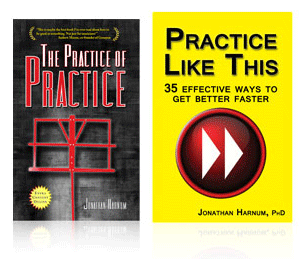
 The Practice of Practice