Nearly every world-class musician I interviewed for the book took naps regularly, usually after the main practice session of the day. It works, and Mednick explains why.
Category: Do This
Finding Flow in Practice: Glenn Gould
There’s a lot to like about the video of pianist Glenn Gould below. Three things happen in the video that show Gould’s flow state in practice (see clips below).
Great Introduction to the Pipe Organ
A little more basic than the usual fare here, but it’s a nice performance, with rhyme, music, and knowledge. What’s not to like?
What Every Musician Needs: Mo’ Rhythm (there’s an app for that)
There is a new tool that can help you acquire better rhythm for yourself in a fun and easy way: Mo Rhythm Africa, from San Diego percussionist and teacher Monette Marino. More on the app below, after the video.
One of the Most Powerful Tools for Your Practice
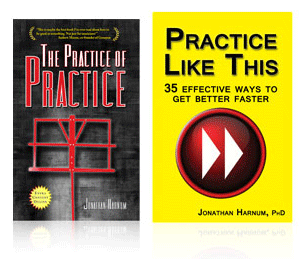
The amazing Dr. Carol Dweck explains how your belief about intelligence profoundly impacts your motivation to learn, the depth of your learning, and your persistence in the face of failure. In music, Dr. Bret Smith discovered similar findings. Lots more in Chapter 6 of The Practice of Practice (free shipping in the US).
The World’s Hidden Music (Rituals)
Watching the video below started me thinking about how music practice, especially when done with others, is a powerful means of communion, in several senses of that word. We have to practice alone in a room, yes, but it’s vital to embrace and seek out playing with others, too. As soon as possible.
How Does Posture Affect Your Sound?
Posture is vital not only to a good sound, but will also help you avoid injury. Jazz trumpeter Ingrid Jensen gives a superb lesson about posture, why it matters, and how to do it. Listen and learn from Ingrid in the video below:
Take a Free Songwriting Course. Open Now! (10-14-14)
Just a quick heads-up about a free songwriting course over at Coursera, taught by Pat Pattison, from Berklee College of Music.
Calling All Wind Musicians: Do This NOW (Please)
Without intonation, music doesn’t resonate, and if things are really out of tune, it can be a painful experience. Jazz trumpeter Ingrid Jensen gives an excellent example of how to play in tune. Here’s Ingrid in a video from JALC’s Jazz Academy to tell you more about playing with drones:
How to Manipulate Your Audience and Make Them Love It
Jazz and popular music of today owes a huge debt to Africa where the driving steady rhythm, swing, and accenting beats 2 and 4 come from. Most audiences in the US don’t know this, and don’t feel that kind of beat. Because of this, audiences frequently end up clapping on beats 1 and 3, as they’re doing in the clip below. Harry Connick Jr. knows better, and he also knows how to turn the beat around so he can help the audience clap on 2 and 4 (that happens around the :39 mark in the video below). His drummer is happy about it and gives a double-fist pump right after Connick makes the switch. Notice how much more hip the sound is!
If You Can’t Sing It, You Can’t Play It: Voice Lesson
One of the best tools for your practice is your voice. Faced with a tough part, if you sing it, you’ll be able to play it better because you’ll be able to hear it better. Singing the passage allows you to “own” it in a deeper way than by pushing buttons or keys on your instrument. You don’t have to be a great singer to benefit from this kind of practice, but here’s a couple good videos on vocal tone production and breathing.
The Fractal Nature of Goals and Music Practice
Setting goals is one of the most powerful things you can do to get better at music or anything else. Some people write them down, some just have a vague idea of what they are, but we all have goals for nearly everything we do. Goals are covered in more detail in The Practice of Practice, but here’s a quick run-down. Goals are like the cool animated GIF of a Sierpinsky fractal above: there are goals within goals within goals. It’s goals all the way down. The usual advice is to break goals down into long-term, mid-term, and short-term goals, but you can and should dive deeper, and consider smaller goals.
 The Practice of Practice