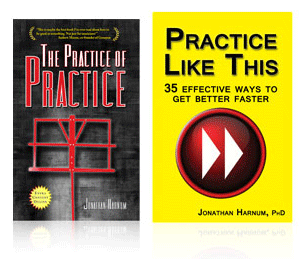
I believe the information in The Practice of Practice is valuable and helpful, so I’ve decided to give attendees the Kindle edition of that as well as the Kindle edition of my bestseller: Basic Music Theory: How to Read, Write, and Understand Written Music (4th ed.). You can get one even if you’re not there! Just click on the image below to get one. They’re only available for December 18th and 19th. Please share this information with your students, parents, and on social media, and thanks!
From Rock to Bach: THE Book for Any Musician On Your List
Until The Practice of Practice, there hasn’t been a book on practice written for musicians who aren’t interested in the school musics (band, choir, and orchestra). The good news is that this book is also valuable for those folks, too. It’s useful whether you’re into Bach, Rock, or any other kind of music.
The World’s Hidden Music (Rituals)
Watching the video below started me thinking about how music practice, especially when done with others, is a powerful means of communion, in several senses of that word. We have to practice alone in a room, yes, but it’s vital to embrace and seek out playing with others, too. As soon as possible.
Boost Your Skills: Adopt a New Instrument. Maybe This Trippy Yaybahar?
Adopting a new instrument can push your musical awareness of pitch, rhythm, timbre, melody, and harmony to new and useful places. A new and unfamiliar instrument can also add a spark to your practice if you’re bored with the same-old same-old. Here’s a fascinating new acoustic instrument, the Yaybahar, made and played by Görkem Şen. What a great sound!
The Flying Fingers of Jeremy Ellis
Looking to hone your rhythmic ability? Gadgets can be a fun way to do it. Here’s Jeremy Ellis demonstrating insane amounts of practice with his finger wizardry on the Maschine Mikro and below that, on its bigger brother, the Maschine Studio. Pretty mad skills!
Louis Armstrong + Dancing Skeleton = Happy Halloween!
Louis Armstrong performs “Skeleton in the Closet,” complete with a dancing skeleton, from the 1936 movie Pennies From Heaven.
How Does Posture Affect Your Sound?
Posture is vital not only to a good sound, but will also help you avoid injury. Jazz trumpeter Ingrid Jensen gives a superb lesson about posture, why it matters, and how to do it. Listen and learn from Ingrid in the video below:
There Are Just Three Rules of Music Practice….
There are just 3 rules of music practice, and nobody knows what they are. This is good news.
Take a Free Songwriting Course. Open Now! (10-14-14)
Just a quick heads-up about a free songwriting course over at Coursera, taught by Pat Pattison, from Berklee College of Music.
Oud Playing To Make Your Jaw Drop (also guitar, bass, req, and drums)
Joseph Tawadros and his oud, 2011
All practice and now play is not a good idea. Now and then I like skip any kind of practice advice and feature great musicians and albums you might not have heard of before. Check out the video below.
Calling All Wind Musicians: Do This NOW (Please)
Without intonation, music doesn’t resonate, and if things are really out of tune, it can be a painful experience. Jazz trumpeter Ingrid Jensen gives an excellent example of how to play in tune. Here’s Ingrid in a video from JALC’s Jazz Academy to tell you more about playing with drones:
This Might Melt Your Brain: Anna-Maria Hefele Sings 2 Notes At Once
The overtone series is the sonic example of the Golden Ratio, and it underlies all music (and all sound, really), no matter where the music comes from. Brass players are intimately familiar with the overtone series (also known as the harmonic series), even if they don’t know what it’s called. Produce sound through any tube (like didgeridoo, shofar, flute, bugle, trumpet, garden hose, etc.) while keeping the length of the tube the same (i.e. don’t push keys or valves), and you’ll hear the overtone series. With practice, you can do it with your voice, too, as demonstrated by singer Anna-Maria Hefele in the video below. After her demonstration, there’s a couple more video of what overtone singing sounds like in a piece of music.
 The Practice of Practice